


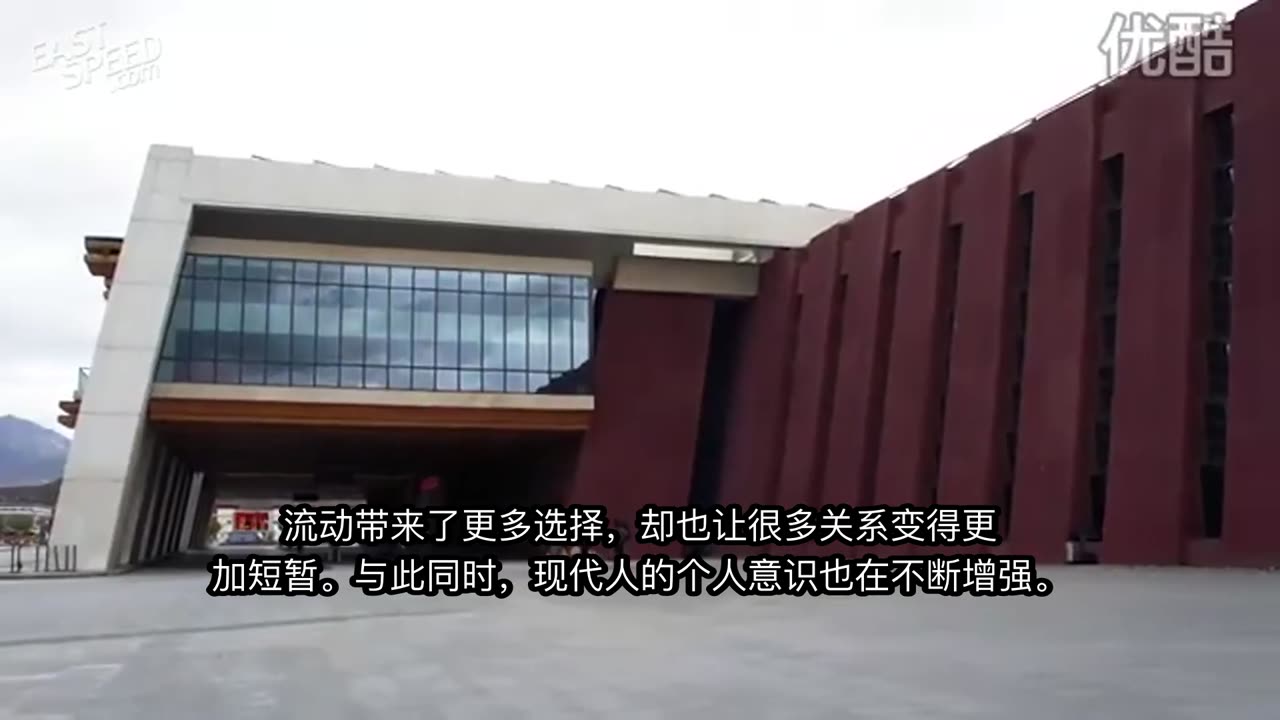
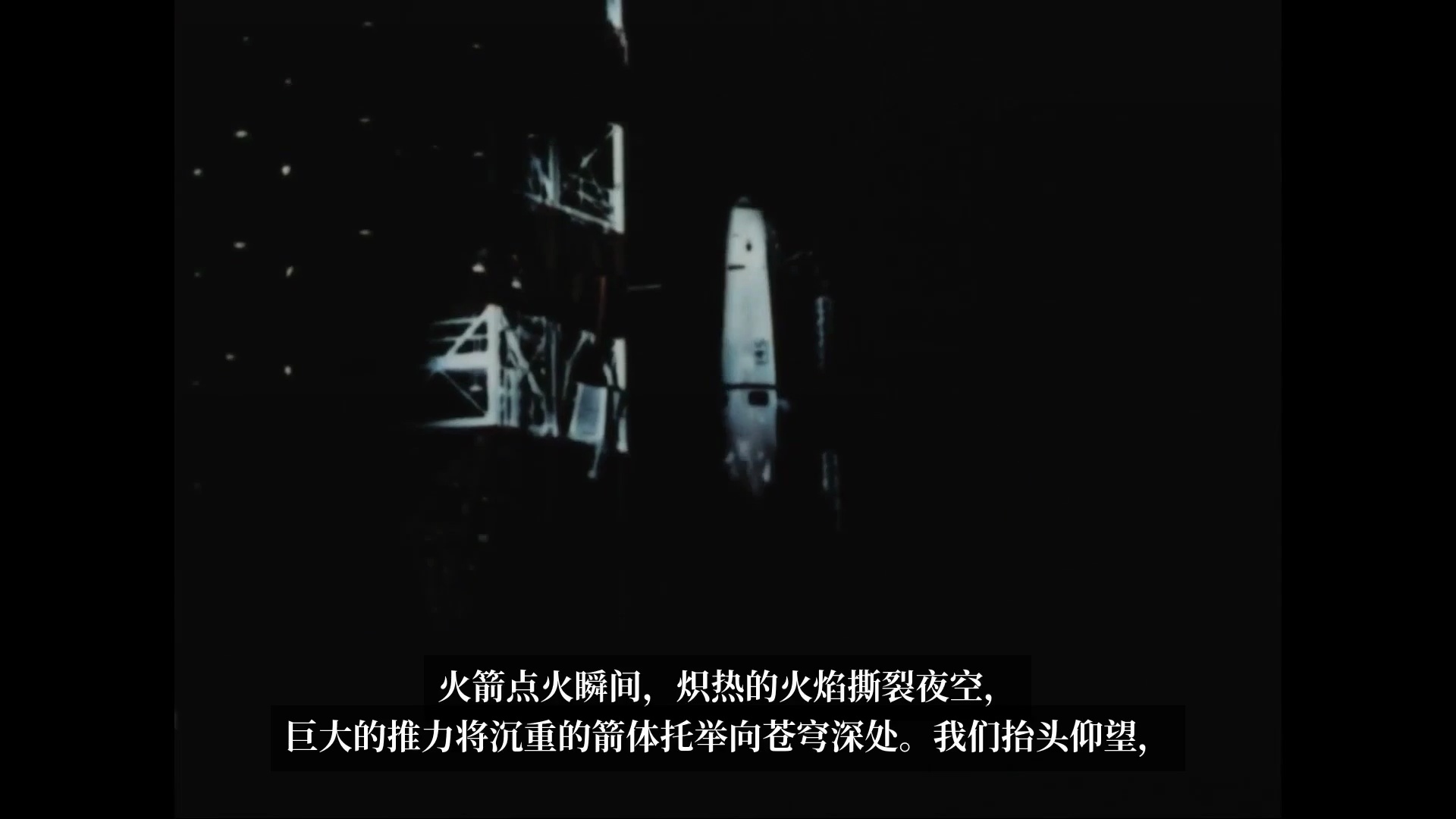
 ▶03:21
To Space, On a Rocket
太空科普 · 火箭如何送人上天
AUTONOMOUS SCRIPT → SCREEN · LONG-HORIZON TOOL AGENT
The Whole Editing Room in One Agent
From Narration to Long-Form Video
1Xidian University 2WeChat Vision, Tencent Inc.
WeVisCut connects tool execution with policy learning for long-form script-to-video production. Editing inversion and verified replay recover executable supervision from 3,750 finished projects, yielding 134,771 training examples for a single 9B policy. On 100 held-out tasks, it achieves a 90.5 overall score and uses about 33× fewer generated tokens than Claude Opus 5 per successful output minute.
Every turn is observe → think → act. After the first cut lands, the director chats: swap a shot's source, change the music, restyle the captions — the policy re-plans locally and re-delivers, never re-shooting what already worked.
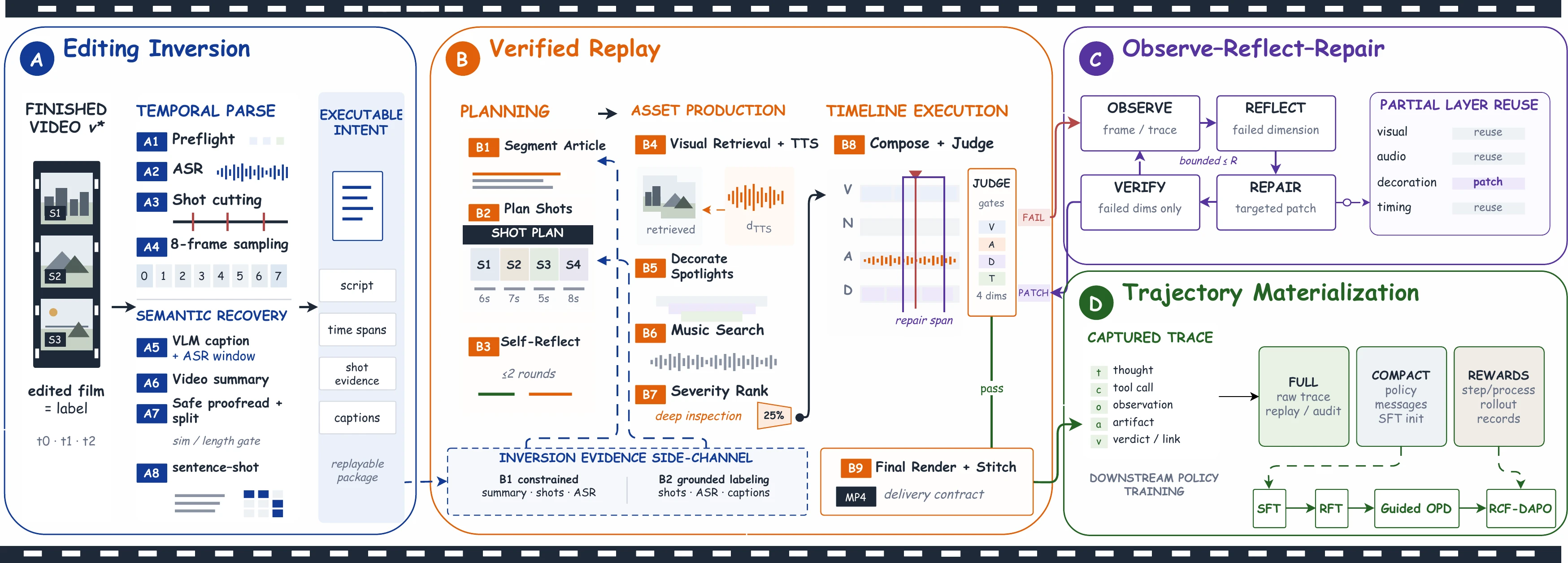
We recover editing intent from finished narration-driven videos, then replay it with production tools. The four-stage pipeline adds observation, bounded repair and trajectory materialization to produce executable supervision.
WeVisCut maintains shared production state across tool calls. Runtime feedback informs subsequent decisions, inspection, bounded repair and replanning instead of following a fixed open-loop workflow.
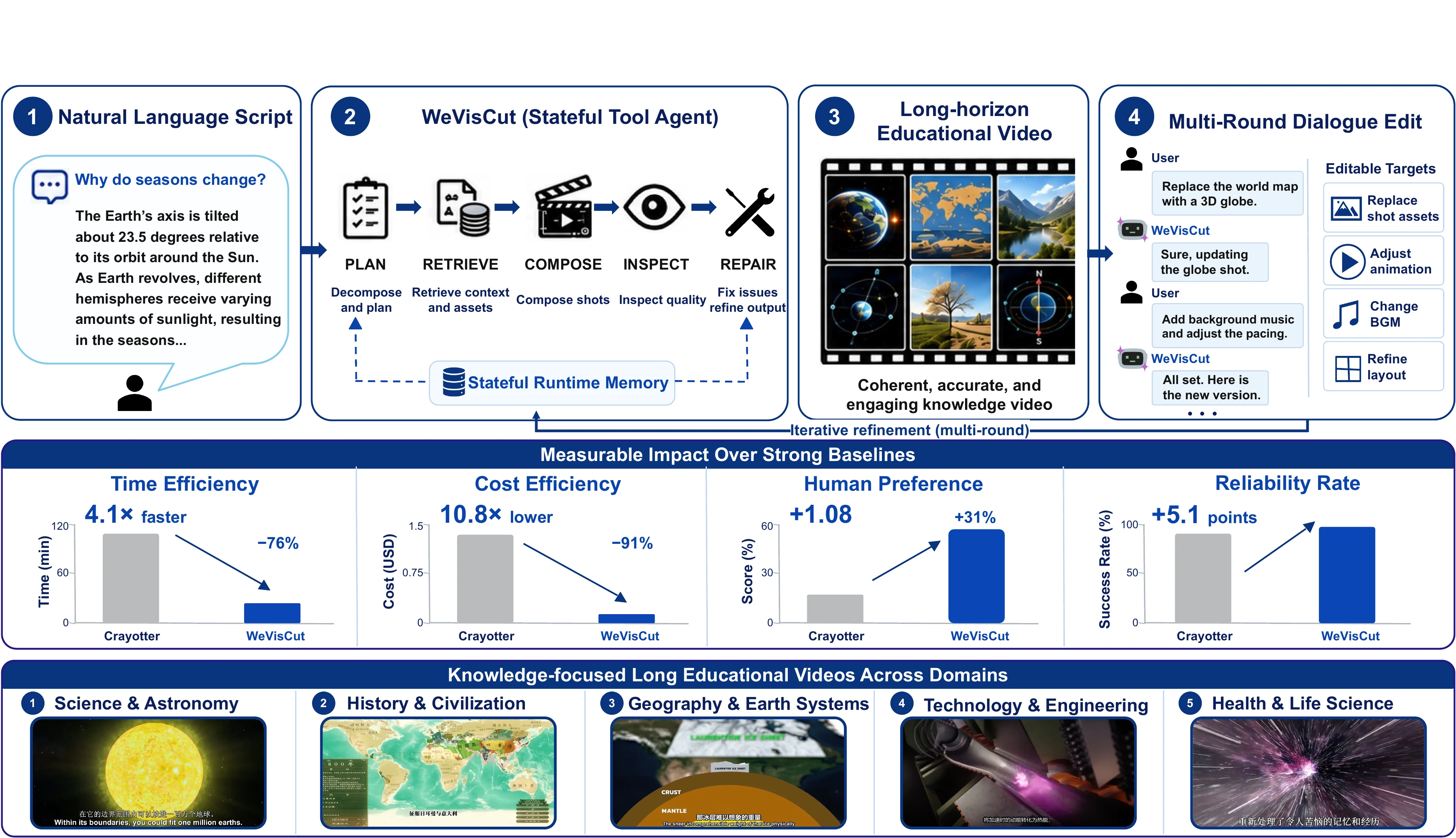
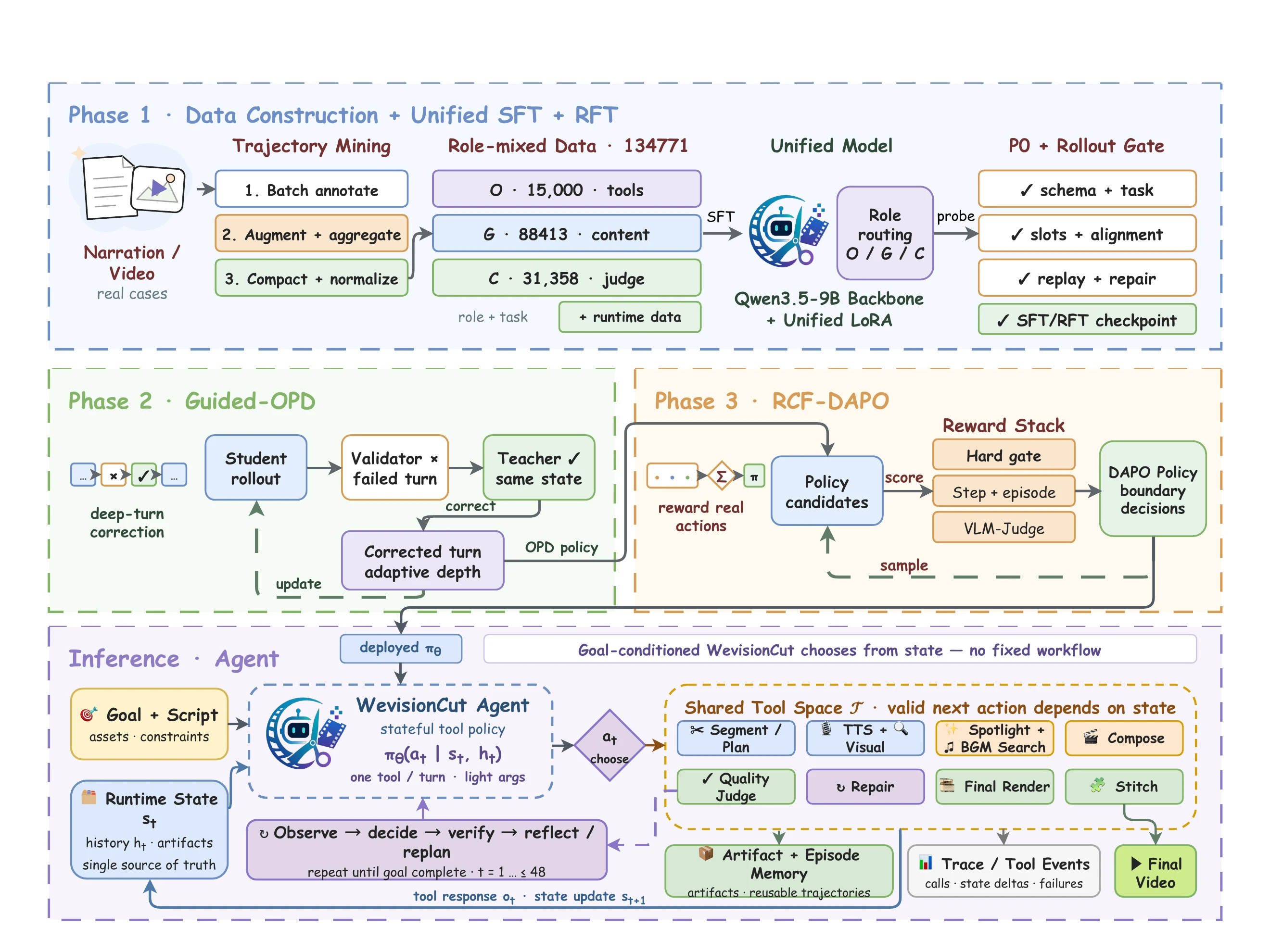
Selects legal tools from the current production state and coordinates planning, execution, inspection and delivery.
Creates scripts and shot plans, retrieves visual and audio assets, and composes narration, decorations and timeline edits.
Inspects returned artifacts against quality dimensions, identifies failures and routes targeted repair.
Validated tool returns update canonical state and artifacts, so each next action uses the latest run status.
Local fixes preserve successful work; inspection evidence feeds back into the policy for the next decision.
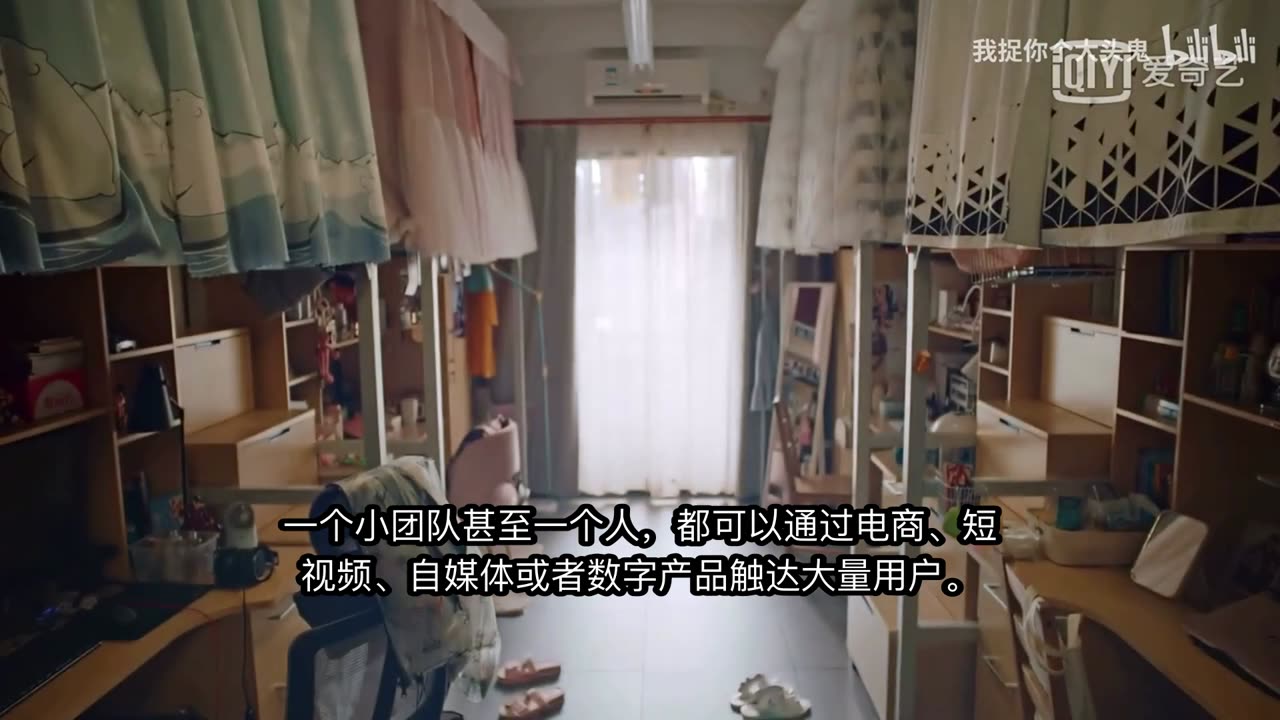
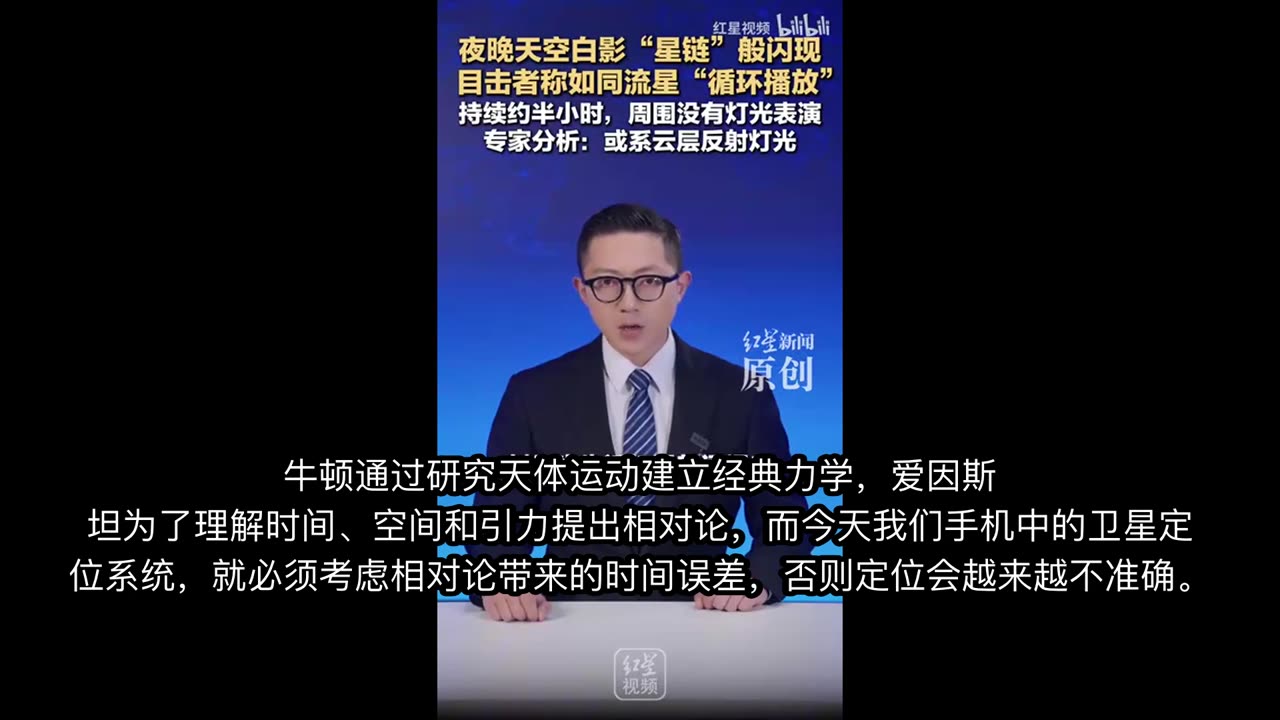
Unedited deliveries from the deployed runtime. One script in — one finished film out.
▶03:21太空科普 · 火箭如何送人上天
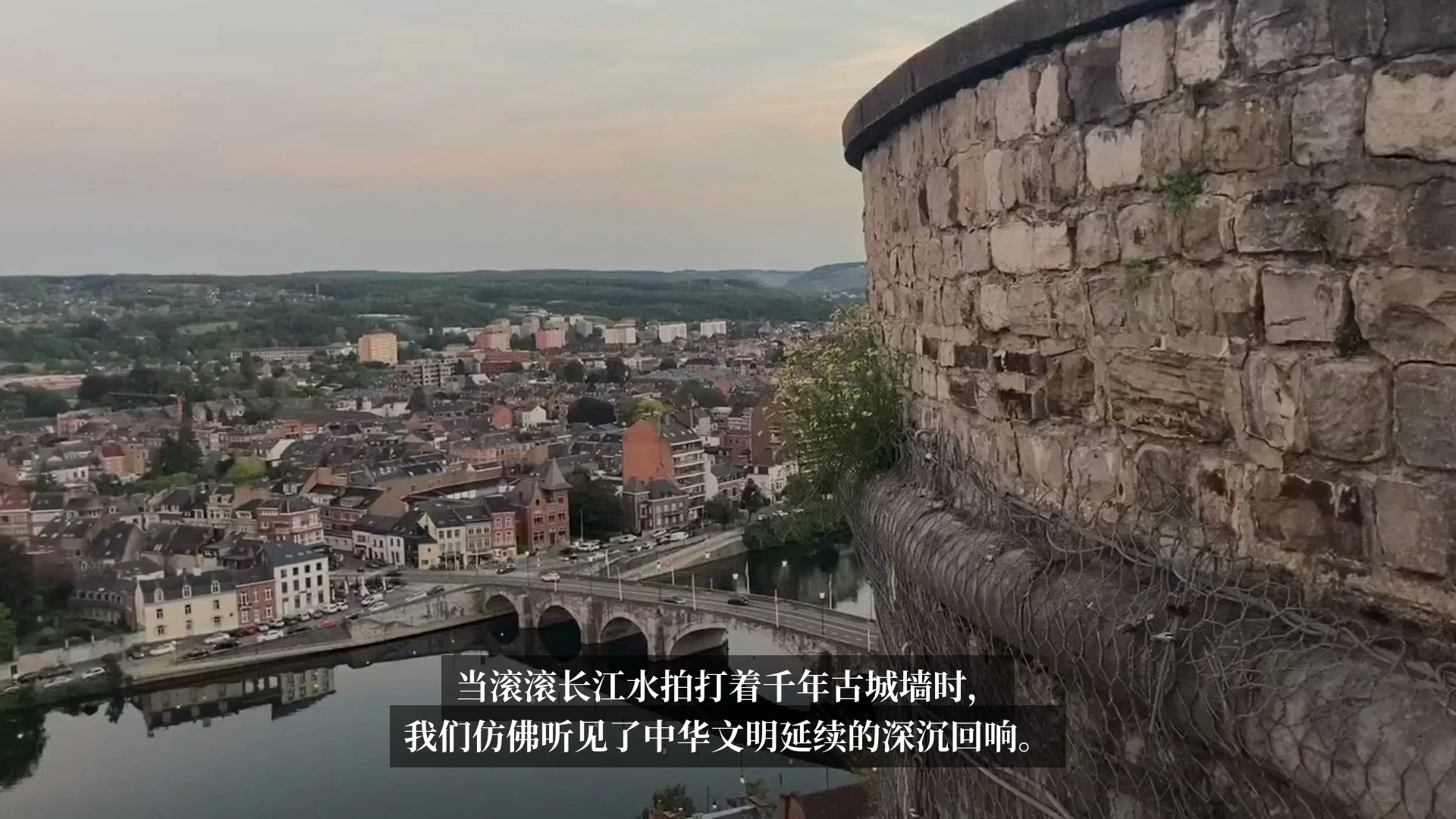 ▶05:49
中华文明 · 时间洪流中的延续
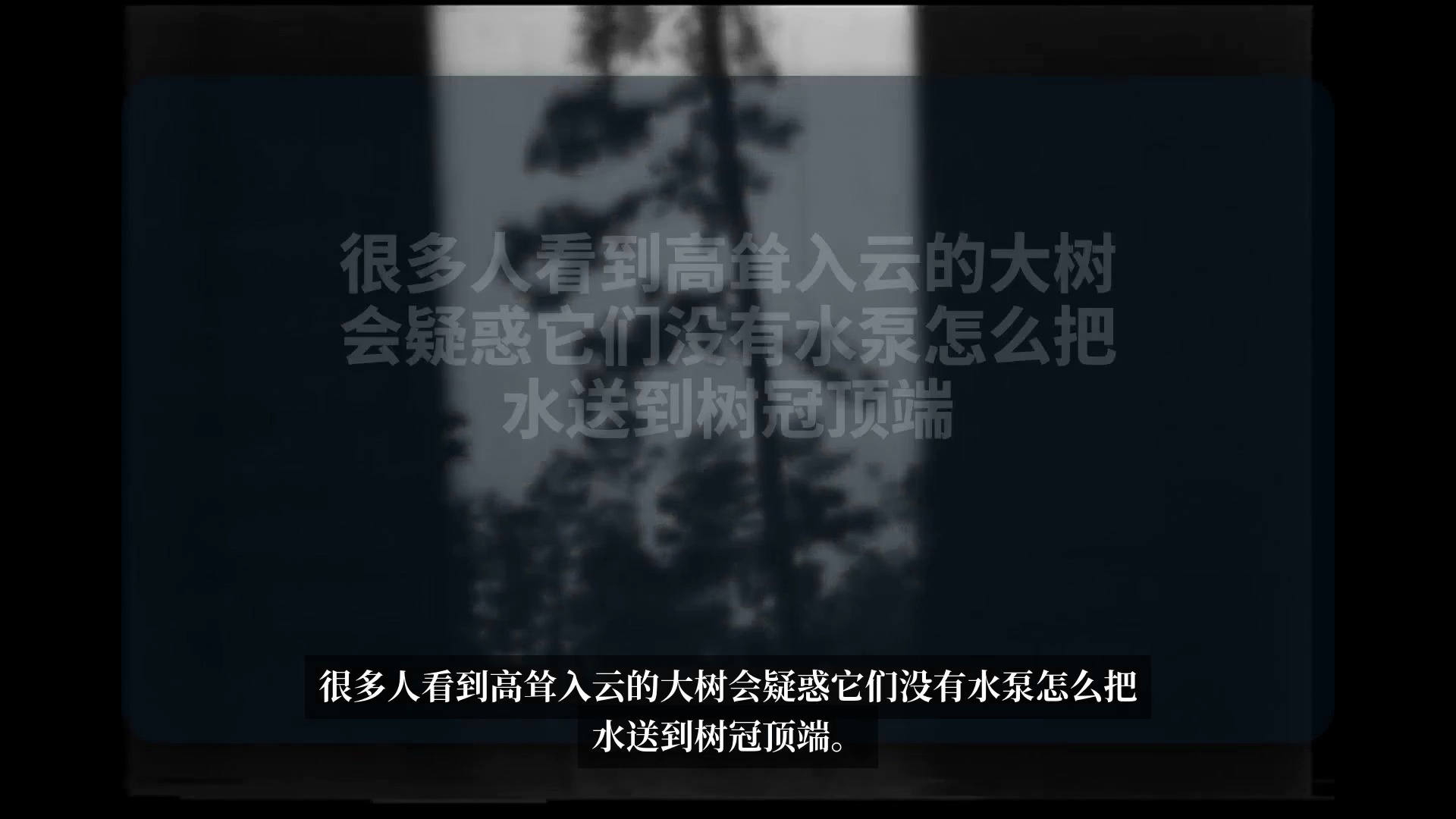 ▶04:37
没有水泵 · 大树如何送水上树冠
100 held-out script-to-video tasks · 5 independent runs · 5 metrics (mean ± std), descriptive Overall score and cost per successful output minute.
| METHOD | SCF↑ | VNSM↑ | TPR↑ | LHC↑ | ERY↑ | OVERALL↑ | CALLS/SUCCESS MIN↓ | TOKENS/SUCCESS MIN↓ |
|---|---|---|---|---|---|---|---|---|
| GENERAL-PURPOSE BASELINES | ||||||||
| Qwen3.5-9B | 69.8±1.6 | 59.2±1.8 | 79.5±1.7 | 93.7±0.8 | 70.4±2.1 | 74.5 | 3.1 | 11,883 |
| Qwen3.6-27B | 72.6±1.4 | 59.7±1.6 | 80.1±1.5 | 95.1±0.7 | 72.1±1.9 | 75.9 | 3.9 | 6,742 |
| Qwen3.6-35B-A3B | 71.9±1.9 | 56.7±2.0 | 83.4±1.8 | 97.3±0.6 | 79.4±2.3 | 77.7 | 4.7 | 27,554 |
| REFERENCE MODELS | ||||||||
| Qwen3.5-397B-A17B | 75.8±1.5 | 64.1±1.7 | 84.6±1.6 | 96.2±0.8 | 86.9±1.8 | 81.5 | 6.0 | 15,223 |
| Gemini 3.1 Pro | 80.2±1.2 | 66.5±1.3 | 88.2±1.2 | 98.0±0.5 | 90.3±1.5 | 84.6 | 4.5 | 13,814 |
| Claude Opus 5 | 87.1±1.0 | 74.8±1.1 | 93.1±1.0 | 98.6±0.4 | 95.8±1.2 | 89.9 | 11.6 | 78,763 |
| OUR METHOD | ||||||||
| WeVisCut (Ours) | 88.4±2.1 | 74.6±2.3 | 94.0±2.0 | 98.8±0.5 | 96.7±1.8 | 90.5 | 3.1 | 2,377 |
Common-harness results on 100 held-out tasks across five runs; Overall is the descriptive mean of the five task metrics.
| NATIVE SYSTEM | SCF↑ | VNSM↑ | TPR↑ | LHC↑ | ERY↑ | OVERALL↑ | WALL MIN/OUTPUT MIN↓ | USD/OUTPUT MIN↓ |
|---|---|---|---|---|---|---|---|---|
| Crayotter | 81.6 | 67.8 | 89.1 | 94.2 | 91.6 | 84.9 | 8.6 | 0.97 |
| VideoAgent | 78.4 | 65.2 | 86.7 | 93.5 | 88.7 | 82.5 | 10.4 | 0.58 |
| WeVisCut | 88.4 | 74.6 | 94.0 | 98.8 | 96.7 | 90.5 | 2.1 | 0.09 |
Task-matched native systems use the same script, source pool, duration and aspect ratio. Cost includes unsuccessful attempts.
| HUMAN MOS (1–5) | THEME | RICH | NARR | SMOOTH | VISUAL | OVERALL |
|---|---|---|---|---|---|---|
| Crayotter | 3.58 | 3.42 | 3.35 | 3.48 | 3.55 | 3.48 |
| VideoAgent | 3.46 | 3.60 | 3.30 | 3.42 | 3.52 | 3.46 |
| WeVisCut | 4.45 | 4.32 | 4.58 | 4.52 | 4.38 | 4.56 |
Blinded human evaluation on 100 held-out cases · 3 qualified raters · descriptive mean ratings.
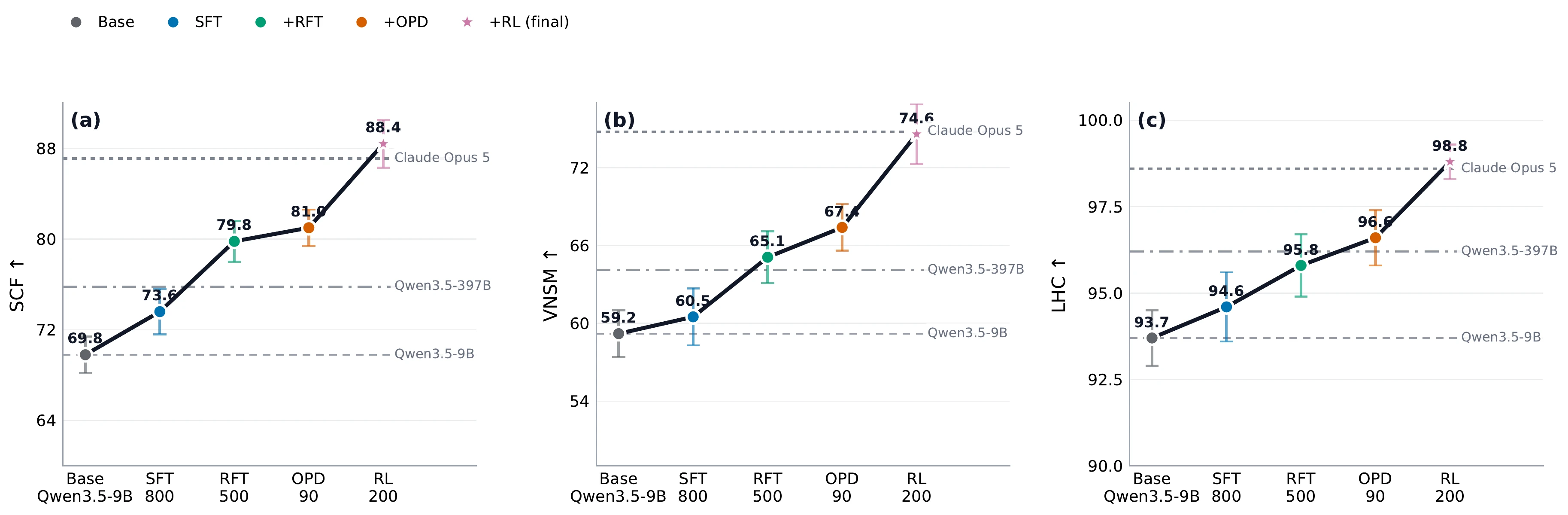
Scaling alone does not specialize. The Qwen3.6-35B-A3B baseline reaches 77.7 Overall, Gemini 3.1 Pro 84.6, and WeVisCut 90.5. Task-specific post-training closes the gap beyond model scale alone.
On par with Claude Opus 5 — at 33.1× fewer tokens. Better on SCF (+1.3), TPR (+0.9), LHC (+0.2), ERY (+0.9), −0.2 on VNSM; every metric within 1.3 points, with 97.0% fewer generated tokens and 73.3% fewer calls per output minute.
Native-stack advantage holds end-to-end. +6.8 SCF over Crayotter and +10.0 over VideoAgent, while running 4.1× / 5.0× faster at 10.8× / 6.4× lower cost — and humans prefer it on every dimension (4.56 vs 3.48 overall).
Three training phases specialize the 9B policy. Unified SFT and runtime-verified RFT initialize tool use and recovery; Guided-OPD trains recovery decisions; RCF-DAPO optimizes decision quality. Overall rises from 74.5 for the base model to 90.5.
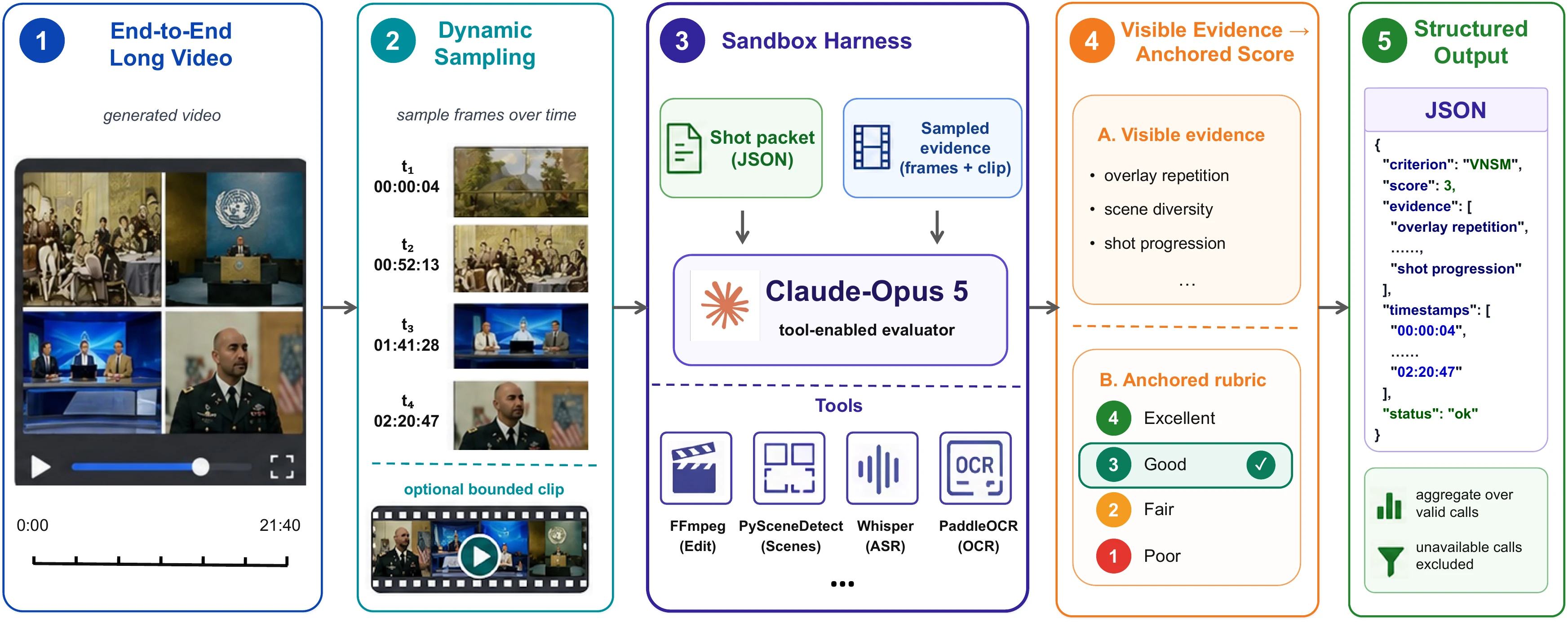
A finished film is sampled uniformly per shot; the harness confirms keyframes as visual evidence and runs its analysis toolchain — layout, saliency, legibility, motion-overlap — before the held-out Claude Opus 5 judge scores two rubric dimensions: visual_impact and clarity , each with detailed reasoning and cited frames.
构图遵循三分法,主体稳定处于视觉重心;暖棕复古色调全片统一,特写与中景交替避免视觉疲劳,转场节奏贴合旁白呼吸感。扣分项:S11 叠化时长略拖。


字幕与背景对比度 7.2:1,全片无文字溢出与遮挡;关键信息均与图示动画同步出现,动效未干扰正文阅读;S07 信息密度偏高,但仍在可读阈值之内。


Four held-out scripts, each produced by both systems from the same script, source pool, duration and aspect ratio. Pick a domain — both sides switch together; press play, both rolls run in sync.
@misc{mu2026weviscut,
  title  = {WeVisCut: The Whole Editing Room in One Agent: From Narration to Long-Form Video},
  author = {Mu, Chenyu and Weng, Wenming and Wang, Qinrui and Ye, Xingsong and Yu, Hao and He, Jun and Sun, Chong and Li, Chen and LYU, Jing and Yang, Erkun and Deng, Cheng},
  year   = {2026}
}